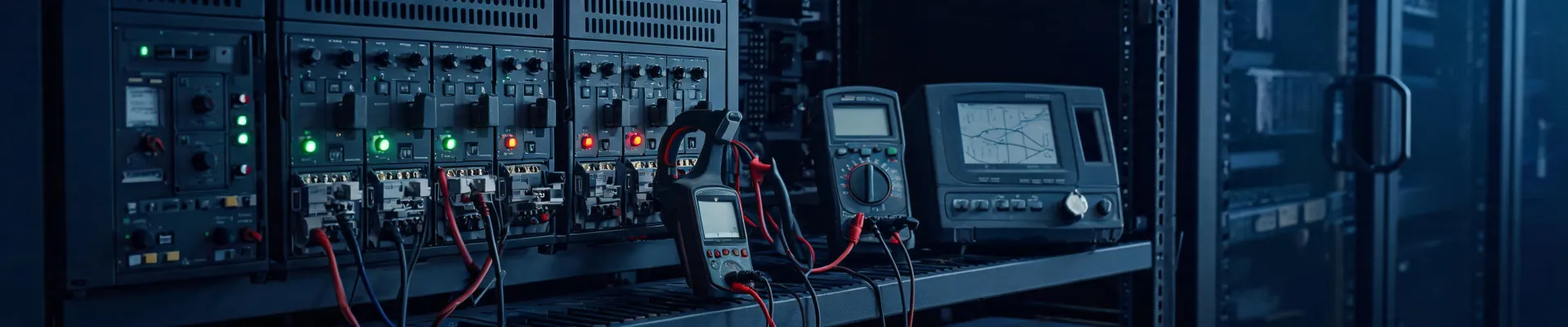
It Started with a Pushback I Didn't See Coming
In March 2024, a small solar installation company sent us an inquiry for a batch of solar inverter catalog units—six pieces, mixed models, roughly $2,300 total. My first instinct, honestly, was to hand it off to a junior rep. We move Vertiv UPS systems in pallets. Six inverters felt like a rounding error.
I'm glad I didn't.
That order turned into a lesson about what to look for in a inverter supplier—and it cost me a relationship with one vendor I'd trusted for years.
The Background: Why I Even Looked at It
We'd been expanding our solar inverter sourcing side of the business. Not because it's glamorous—it isn't—but because our B2B customers kept asking. They'd buy Vertiv UPS systems from us, then ask, "Can you also get us the inverter for the solar side?" And we kept saying no. After enough no's, we hired a sourcing specialist and started vetting inverter manufacturers.
I was still in my old mindset at that point. In my head, Vertiv Ups systems were the real business. Solar inverters were an accessory. But that's the thing about quality control—you don't get to apply different standards based on order size. Or you shouldn't.
The Trigger: A Rep Who Didn't Want the Order
One of our junior reps—let's call him Dan—had been sitting on this $2,300 inquiry for three days. When I asked why, he said, "It's small, and the customer keeps asking for detailed spec sheets. I don't want to spend two hours on a six-piece order."
I have mixed feelings about that response. On one hand, I get it—time is money. On the other, that customer was building something. You don't know who's going to be buying 200 units in two years. I told Dan to forward it to me.
The customer—a two-person solar installation crew in Arizona—needed six inverters for a residential project. They wanted to see the solar inverter catalog, the UL certifications, efficiency curves, temperature derating data. Standard stuff, but thorough.
I sent our usual inverter supplier's spec sheet. Then something felt off.
The Turning Point: The Spec Sheet Didn't Match the Certificate
I pulled the UL certificate directly from the vendor. The model number on the certificate ended with a different suffix than the spec sheet. Minor discrepancy—or so I thought. I emailed their engineering contact.
"Oh, that's just the series designation. Same unit."
That answer was way too casual for a $2,300 order that could become a $200,000 relationship. So I requested a sample unit. I paid for it myself—about $380 including shipping—because I didn't want to involve procurement for something this small.
When it arrived, I tested it against the spec sheet. The efficiency at 50% load was 96.2%, not the 97.5% claimed. Not a huge gap, but it was measurable. More importantly, the grounding terminal was positioned differently than the internal photos in the catalog.
Was it a dealbreaker? For a residential install in Arizona? Maybe not. But I couldn't verify the unit was identical to the certified version. And if I couldn't verify it, I couldn't put our name on it.
The Resolution That Surprised Me
I called the vendor and told them we needed a corrected spec sheet or a different model. They pushed back—said I was being too picky, that "everyone accepts these tolerances."
I said no. We ended up sourcing from a different manufacturer for that order. The profit margin on six inverters was thin anyway. But here's the part that surprised me: the Arizona installer started ordering through us regularly. Within 14 months, they've placed over $47,000 in orders—mostly Vertiv UPS systems for their small commercial clients, plus repeat inverter orders.
That relationship only happened because we treated their $2,300 order like it mattered.
What I Relearned About Supplier Vetting
First, what to look for in a inverter supplier isn't just price and lead time. It's willingness to provide verifiable documentation. A supplier who says "trust me, it's the same unit" is telling you something.
Second, small orders are diagnostic. They're a cheap way to test a supplier's responsiveness and accuracy before you commit to volume. The vendors who treat your $500 inquiry with the same rigor as your $50,000 PO are the ones worth keeping.
Third—and this is the one I keep coming back to—I was wrong to think of solar inverters as a side business. The B2B buyers who need Vertiv Ups systems often need solar inverters too. They're building hybrid systems. If we can't source both reliably, someone else will.
We now include a simple check in every new supplier contract: spec sheet must match the UL certificate exactly, or the batch gets rejected at the vendor's cost. That's not aggressive. That's basic. But I only added it after that $2,300 order taught me it wasn't automatic.
The Arizona installer still calls me directly sometimes. Last month they asked for a quote on a 20kW system with battery backup. I didn't pass it to Dan. Not because he doesn't deserve it—but because I wanted to handle it myself. Some lessons you carry personally.
Ingrid Bauer
Ingrid Bauer is an industrial automation and electromechanical systems analyst specializing in variable-frequency drives, motors, pumps, and complete power-drive systems. She applies IEC 61800-9-2 drive-efficiency methods, IEC 60034-30-1 motor efficiency classes, and ISO 9906 pump tests while examining torque-speed duty, harmonics, head, flow, and operating-point efficiency. She helps engineers size drive and pump combinations for real load profiles, cable lengths, ambient conditions, process control, energy use, and maintenance access.