It Started With a Four-Hour Outage
In January 2024, our main production facility lost power for four hours. No warning, no weather event—just a grid failure that took down two assembly lines and cost us roughly $18,000 in lost output. I'm the office administrator for a 220-person manufacturing company. I manage about $1.2 million in annual procurement across 14 vendors, and until that Tuesday, "backup power" was a line item nobody asked about.
That changed fast. My VP wanted a plan by Friday.
I figured a generator install would be like buying any other capital equipment—get quotes, pick a vendor, schedule delivery. I was wrong about that, and I almost paid for it in a way that would've been visible to everyone.
The Learning Curve Nobody Warned Me About
My first move was embarrassingly basic: I searched "house generator installation near me" and "industrial backup generator supplier" on a Tuesday afternoon. Forty results. No idea how to tell them apart.
Within a week I'd talked to five vendors, and the terminology alone was a project. One asked whether we wanted diesel or natural gas. Another asked what fuel supply we already had on-site. A third sent a spec sheet for a Caterpillar C9 generator—8.8-liter displacement, six cylinders, roughly 250 to 300 kW standby output. I read "caterpillar c9 generator specifications" so many times that week the phrase showed up in my dreams.
The facility manager, thankfully, knew what he was doing. He pulled up a Caterpillar 3516C generator manual PDF from a previous project—16 cylinders, 78-liter displacement, running in the 2,000+ kW range—to show me what "large" actually looked like in this category. We didn't need anything near that size, but the manual helped me parse what the vendor spec sheets were actually saying.
Somewhere in week two, a rep mentioned "hybrid inverter" as an option for one of our smaller sites. I had no idea what that was. Turns out a hybrid inverter is a device that combines solar inverter and battery inverter functions—it manages power flow between solar panels, a battery bank, and the grid or generator. For a site with partial renewable goals, it can make sense. For our main facility, it was overkill. But I'm glad I asked instead of nodding along.
The Problem That Nearly Slipped Through
We narrowed it to two proposals and leaned toward a 400 kW Caterpillar unit for the main site. The timeline was tight—my VP wanted the install started by March. I had a purchase order drafted and ready to send when our facility manager asked me to do one thing: "Walk the electrical room with the installation contractor before you sign."
I almost said no. I had three other projects that week. The meeting was going to eat 45 minutes I didn't have.
I went anyway.
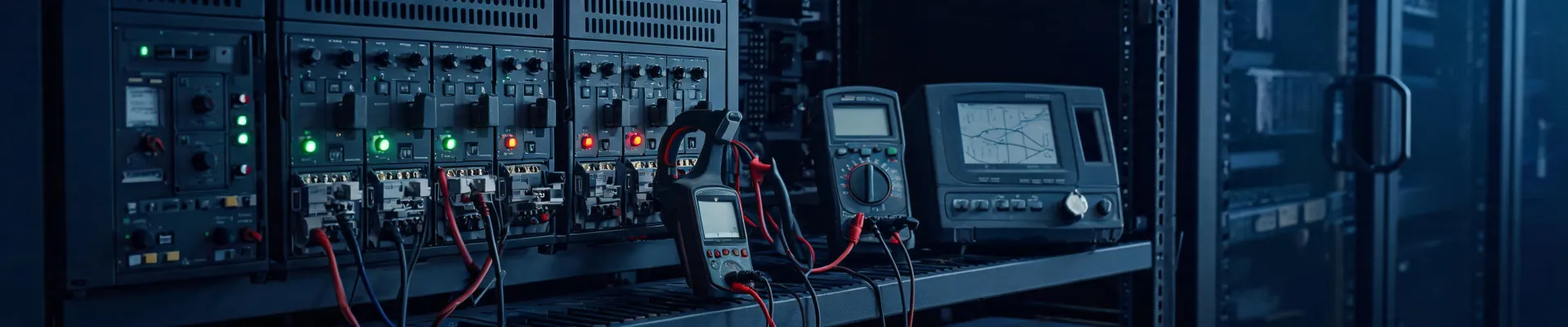
The contractor took one look at our existing panel and said we had a clearance problem. Per NEC 110.26—the working space requirements for electrical equipment—electrical panels need specific clearance around them: 3 feet of depth for equipment up to 150V to ground, and 3.5 to 4 feet for 151 to 600V depending on exposed live parts. Our existing panel configuration didn't meet that. The generator tie-in would have required relocating two panels—work that wasn't in either quote we'd received.
If we'd signed and installed first, we'd have found the violation during inspection. That would've meant tearing out newly installed conduit, rescheduling the contractor, and adding something in the range of $11,000 to $14,000 in rework and delay. All because I almost skipped a site walk to protect my Tuesday.
The conventional wisdom is that procurement is about price and delivery. My experience with this project suggests it's mostly about catching what's missing before the money leaves the account.
What I Actually Learned
Here's the part that still bothers me: I'm the person who double-checks invoices against POs line by line. I confirm delivery dates with vendors a day ahead. I built a 12-point checklist for office supply orders after my third expensive mistake in 2022. But when it came to a six-figure generator installation, I almost skipped the single most important check because the calendar felt tight.
That's the thing about prevention—it never feels urgent until the alternative becomes expensive.
We ended up signing the contract with updated site work included. The extra scope added about $8,400 and two weeks to the timeline. Both stung at the time. But I'll take an $8,400 overrun over a $14,000 rework any day, and the install passed inspection on the first try.
The checklist I built from this—now a 14-point pre-signing verification for any equipment install—has been used on three projects since. It takes about 90 minutes to walk through. That's 90 minutes that keeps me from lying awake wondering what I missed.
A lesson learned the hard way. But learned.
Kwame Boateng
Kwame Boateng is a transformer and power-conversion analyst specializing in distribution transformers, power supplies, inverters, and network integration. He uses IEC 60076 test data for transformer ratio, impedance, losses, and temperature rise, and IEC 62477-1 safety requirements for converter insulation and thermal boundaries while separately comparing harmonics and efficiency curves. He helps engineers and sourcing teams compare equipment against duty profiles, environmental limits, short-circuit behavior, lifecycle energy cost, and service requirements.