-
How much does SMA actually sell, and should I care?
-
What does an SMA Sunny Boy inverter actually cost?
-
Is a cheap inverter really a false economy?
-
"What is the best solar generator" — and do I actually need one?
-
Can I rig a small solar setup to charge boat batteries?
-
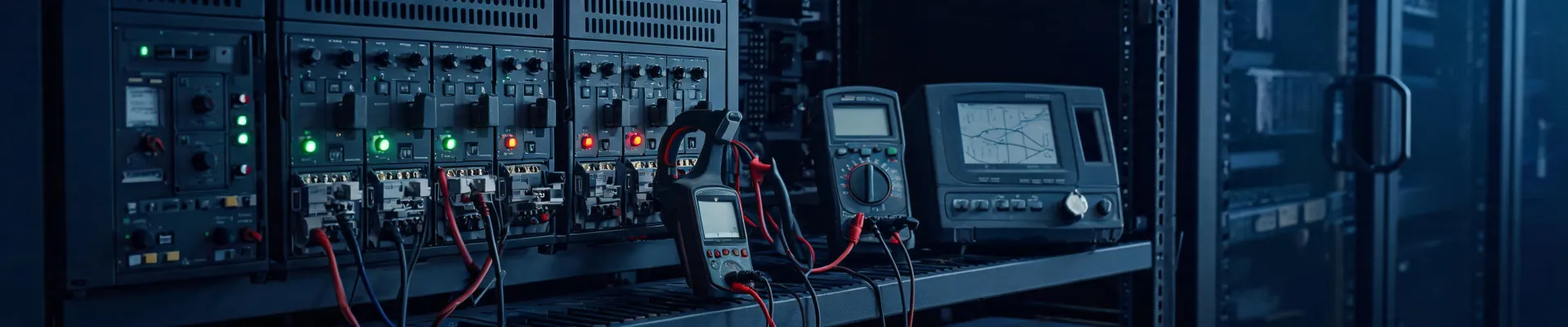
What tools does the installer actually bring, and why should I care?
-
Bottom line — would I pick SMA again?
I manage purchasing for a 120-person company. About $180,000 a year across 8 vendors, mostly office supplies and facility services. Last November, our facilities manager quit in the middle of planning a rooftop solar installation, and the project landed on my desk.
I don't have an electrical background. I have a background in reading fine print and asking vendors the question they don't want to answer. Over four months, I sat through six installer bids and asked the same questions over and over until the answers stopped changing. Here's what I found, organized the way I actually needed it.
How much does SMA actually sell, and should I care?
SMA reported roughly 20.5 GW of inverter shipments in 2023. That number matters less for bragging rights and more for one reason: I've seen two inverter manufacturers go under in the middle of a commercial project, and both times the facility lost warranty coverage overnight.
20.5 GW is big. It means SMA is not a fly-by-night shop, and it means replacement units will exist in a decade. But here's what I checked beyond the headline number — I compared SMA's 2021 shipments to 2023. The line was flat-to-up, not shrinking. For a purchasing admin who does vendor risk for a living: revenue growth is the only credit check that matters on a 10-year warranty.
One contractor told me SMA is "number one globally." Another rolled his eyes and said that depends which market you're measuring. I stopped trying to referee that fight. I only cared whether the manufacturer's install base was big enough that a service tech would still exist when our inverter needed attention in 2033.
What does an SMA Sunny Boy inverter actually cost?
For a 5kW residential/light-commercial unit, equipment price ran $1,900–$2,400 in our quotes. Installed, plan on $2,800–$4,200 (based on four vendor quotes, January 2025; verify current pricing).
Here's the part that cost me a week of back-and-forth. Almost none of those quotes included an anti-islanding disconnect — which our utility requires — and that added $400. Another vendor quoted "$1,450 installed" and buried the fact that price assumed existing conduit and an already-upgraded panel. Our building needed new conduit, a sub-panel, and re-routed grounding.
So I built a script. I now ask: "What's NOT included in this number?" before I ask "What's the price?" The answer on my checklist: anti-islanding, AC combiner box if more than two strings, monitoring gateway if not standard, permits, and crane fees if the roof isn't accessible.
This is the one thing I'll say loudly in a room full of vendors: a quoted price is not a price if the final invoice moves. I've managed $180k in annual spend for six years, and the vendors who list every fee upfront — even when the total looks higher — have never cost me more in the end.
Is a cheap inverter really a false economy?
Our consultant gave us three options: SMA, a cheaper Chinese brand, and a Korean alternative. The delta between SMA and the cheapest option was about 15%.
I almost went cheap. I really did. Then I read the warranty transfer clause. The cheap unit's warranty became void if our facilities management company changed hands — which, if you know anything about commercial real estate management, happens about every three years. SMA's warranty transfer is in writing, and I had their rep confirm it by email.
Here's the part where I'm not going to pretend to be an engineer. I can't tell you SMA outperforms the cheaper brand on efficiency curves. I can tell you that after three years of watching invoices, a documented warranty beats a lower sticker price every time the asset is commercial.
"What is the best solar generator" — and do I actually need one?
I wasted a full Saturday on this search. Every result told me about Jackery and EcoFlow and portable power stations. None of them mentioned that "solar generator" is basically a packaged inverter + battery + charge controller, and most are 1–3 kWh — sized for camping, not for a 28,000 square foot office.
We needed a grid-tied inverter with battery storage as a separate system. Completely different product category.
If you're a facility person who typed "best solar generator" into a search bar at 11pm like I did: stop. Search "commercial battery storage sizing" instead. The consumer content will send you toward a $2,000 portable unit when your actual quote is $30,000+ of commercial gear. Different universe.
Can I rig a small solar setup to charge boat batteries?
Not my project — but the same facilities manager who quit had a sailboat, and he asked me as a favor whether a panel could charge his 12V bank. It turns out the principle is identical to commercial solar: 100–200W panel, MPPT charge controller, and you're charging a 12V marine battery. A basic maintenance setup runs $400–$600 four months ago when he priced it.
I'm including this because it taught me something about vendor behavior: the same installers who quote commercial systems quote marine systems, and their markup behavior doesn't change. If they tack on a $180 "marine-grade wiring" fee without telling you, they'll tack on a $400 "anti-islanding" fee without telling you. Look at how a vendor prices the small job — that's the real pricing culture.
What tools does the installer actually bring, and why should I care?
Our maintenance guys keep a standard spark plug socket size — 5/8 inch, 16mm — in every toolbox because the backup generator needs it. I assumed the solar installers would bring their own kit.
They did. But they borrowed our 1/2-inch drive torque wrench because theirs was delayed in shipping, and that delay cost us a full day of labor charges — about $600.
The third time a tool didn't show up on schedule, I added a "tool manifest" appendix to the install contract. Basically, the vendor has to list every specialty tool required for the job five business days in advance. Saved us $600 the next time, and probably more by flagging the MC4 crimper that arrived late on a Friday (note to self: keep that appendix in every contract going forward).
Bottom line — would I pick SMA again?
Yes, but not for the reason the marketing materials would want me to say.
Not because it's the absolute best on some spec sheet I can't fully audit. Not because I got a great price — I didn't. Because when I emailed their regional rep at 4:47 on a Friday with a question about ground-fault protection, I had an answer with an attached data sheet by Monday morning. I've managed eight vendor relationships for six years, and responsiveness is the single most reliable predictor of how a contract ends. That's not a marketing claim — that's a purchasing admin who has eaten $2,400 in rejected expense reports because a vendor couldn't produce the right documentation.
If you're buying SMA inverters for a commercial project, my advice: ask for three reference sites of similar size, and require post-install monitoring data from the first year. If they can't produce it, or if they dodge the question, you've just learned something important about how the warranty conversation will go later.

Rebecca Sloan
Rebecca Sloan is a power distribution and protection analyst specializing in circuit breakers, switchgear, contactors, fuses, surge protective devices, and coordination. She applies IEC 60947-2 breaker requirements, IEC 60269 fuse characteristics, and IEC 61643-11 tests while examining rated voltage, breaking capacity, time-current curves, selectivity, and prospective short-circuit current. She helps engineers and buyers compare protective devices against documented fault levels, installation conditions, maintenance access, and continuity priorities.